ETH Denver, 2024. Before Daedalus existed. Johnny and I are standing around arguing about what happens when anyone can code. Everyone at that conference had a take on AI and jobs, and most of them were boring. We ended up talking about Iron Man.
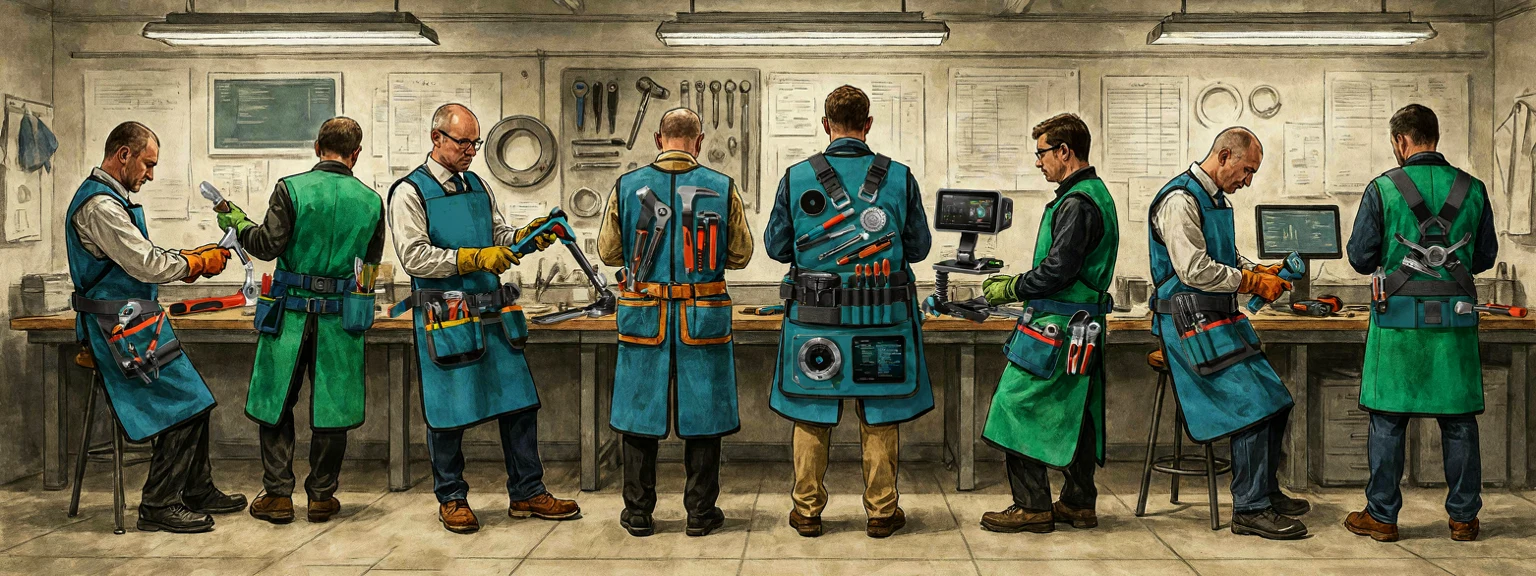
Tony Stark in the suit is ten times the man he is out of it. That's the obvious part. The less obvious part: other people can wear an Iron Man suit too, and they get maybe twice as good. The same hardware and repulsors, just used less efficiently. The difference is that Tony's suit was built for Tony: measured to his body, wired to his reflexes, shaped around the way he actually moves. A borrowed suit still works, it just doesn't make you superhuman, it makes you a guy in a suit.
That conversation didn't found the company, but the idea never left: the suit matters, and whose suit it is matters more.
Two years later, we hear the same fear in almost every client meeting, sung in two keys. Owners lean across the table and tell us they don't want AI gutting their staff. Employees pull us aside and ask if this thing is coming for their job. Different chairs, same story: AI as substitute, adoption as subtraction.
That story is bullshit, and it has the whole thing backwards. AI in a business is not a robot that takes your chair. It's a suit. An empty suit is a very expensive coat rack. It needs a pilot, someone who knows the customers, the exceptions, the way the work actually flows. The question was never whether the suit replaces the pilot. It's how much more the pilot can do wearing it.
Here's what that looks like when it's real, and I'm a credible witness, because before I worked at Daedalus, I was Daedalus' first client.
My other life is flood insurance. You don't just become a flood adjuster. The program requires five years of experience, or you apprentice under someone who has it. That someone is me. After a major hurricane, I take four to six rookies out into the wreckage and teach them the job from scratch. And for years, the biggest chunk of my time on a storm wasn't teaching anybody anything. It was reviewing claim files late into the night, hunting mechanical errors line by line, the same mistakes, storm after storm, file after file. Necessary work. Mind-numbing work.
Daedalus built me KingTide, a tool that audits flood claims. It catches the mechanical errors before a file ever hits my desk. Then it got better than that: my trainees run their own files through it first. The software became a feedback loop. They see their own mistakes, they stop making them, and the files come in cleaner every week. The tool doesn't just save the trainer. It trains.
What did I do with the hours it handed back, many of them, every week of every storm? I spent them on the only part of the job that ever needed a human. Teaching these men and women how to be better estimators. How to tell the story of a loss so the file stands up. How to sit across the kitchen table from a family that just lost everything and treat them like people instead of paperwork. The mechanical part of my job went to the machine. The human part got bigger.
It worked well enough that I changed careers. I watched what one piece of software built around one person's actual work could do, and I went and joined the company that built it. I used to be the customer. Now I'm writing this. Make of that what you will.
That's the pattern, and it travels. Strip the mechanical crud out of a job and what's left is the human part, the part where taste, judgment, and relationships decide who wins. A salesperson who never has to think about follow-up sells more. A service team freed from data entry answers faster and better. The recovered time turns into new customers, new products, better work, or work that was never getting done at all. The job doesn't shrink. It gets bigger and more human at the same time.
We'll be straight about the limits. A suit amplifies whoever is wearing it, and it doesn't care what it's amplifying. It won't supply direction, and it won't fix a broken workflow. It'll fly a broken workflow into a mountain at twice the speed. The payoff only comes when the tool fits how the business actually works, which is exactly why off-the-shelf disappoints. Generic software is somebody else's suit, cut for an average company that doesn't exist, and your people pay the difference every single day, one workaround at a time, keying the same data into three systems because the integration technically exists.
Custom used to be a rich company's game. AI-assisted development killed that math. Building the suit to fit the wearer is now cheaper than years of renting one that almost fits. That's the work at Daedalus: sit with a business long enough to learn what its people actually do all day, then build the thing that makes them ten times better at it.
So the next time somebody tells you AI is going to replace your staff, ask them a better question: what could my people do if they had superpowers? You already have the pilots. People who know your customers, your exceptions, the strange details no platform on earth was built for. They've been doing all of it bare-handed this whole time.
Now picture the whole roster suited up. The assistant who runs the entire pipeline before lunch and spends the afternoon making every client feel like the only client. The salesperson who never drops a follow-up. The trainer who finally gets to train. The same people you have today, ten times what they are, in suits built for them instead of by someone else, for someone else.
That's not a workforce being replaced. That's a workforce taking off.